Case Study 01
Making CAS BioFinder
A Drug Discovery Platform for Medicinal Chemists and Biologists
Challenge
Create a platform of solutions for medicinal chemists and biologists to search curated and connected data to make informed decisions regarding the drug-discovery process.
Impact
A 0 → 1, design and research driven product with over 1,500 users which delivers drug/target/disease relationships with 82% time-to-task completion for biologists and medicinal chemists, netting $3.67M additional revenue for the 2025 fiscal year.
Background & Research
CAS BioFinder started as a concept, codenamed "Darwin" in 2016, for an expansion into the biologics space for CAS content curation. A prototype was developed during that time and informed a lot of preliminary research which was inherited for this project. CAS was also actively benchmarking existing software solutions to retrofit a framework and functionality to break into this space.
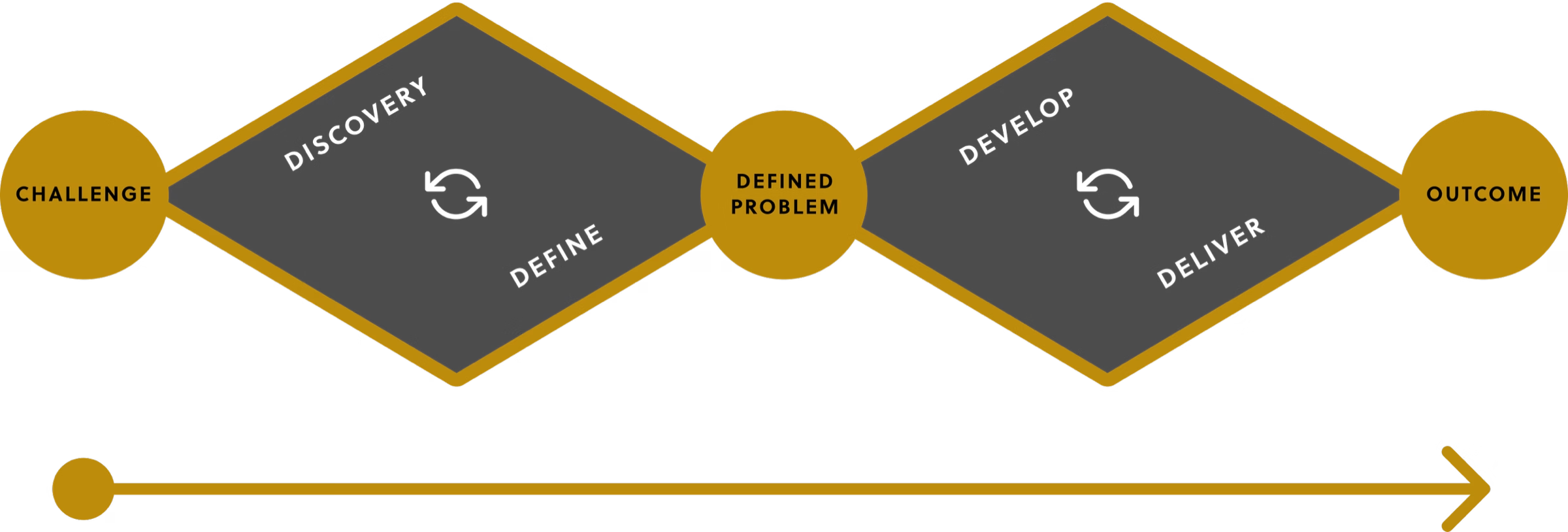
The double diamond framework used across all UX program discovery and definition work
Competitive Analysis, Prototyping & Research
While vetting a software called Chemotargets by Clarity, I began creating a framework for generative research. This software was developed by an academic firm without any user research or design processes. The UX program I manage leverages the double diamond paradigm for discovery, definition, ideation, and implementation across all products.
Using the existing application, the Darwin concept, and similar product benchmarks, I designed low-fidelity prototypes to convey organizational concepts and information for research candidates. The challenge was finding clean data representative of CAS content curation efforts. Scientists require factually accurate information to feel comfortable remarking on the efficacy of a prototype in research.
After commissioning and collaborating on research with an external agency, I participated in interview sessions using rapid iterative testing and evaluation (RITE) usability assessments to quickly address gaps in the design and workflow. Three key themes emerged:
- Customers wanted a one-stop shop for all drug and ligand details, with the ability to compare binding affinity against known protein targets.
- Referential information from journals and patents was critical to validate hunches and search findings for ligands and their protein pairs.
- The ability to upload proprietary molecules and algorithmically determine predicted binding affinity was highly desired, presenting a unique challenge around intellectual property security.
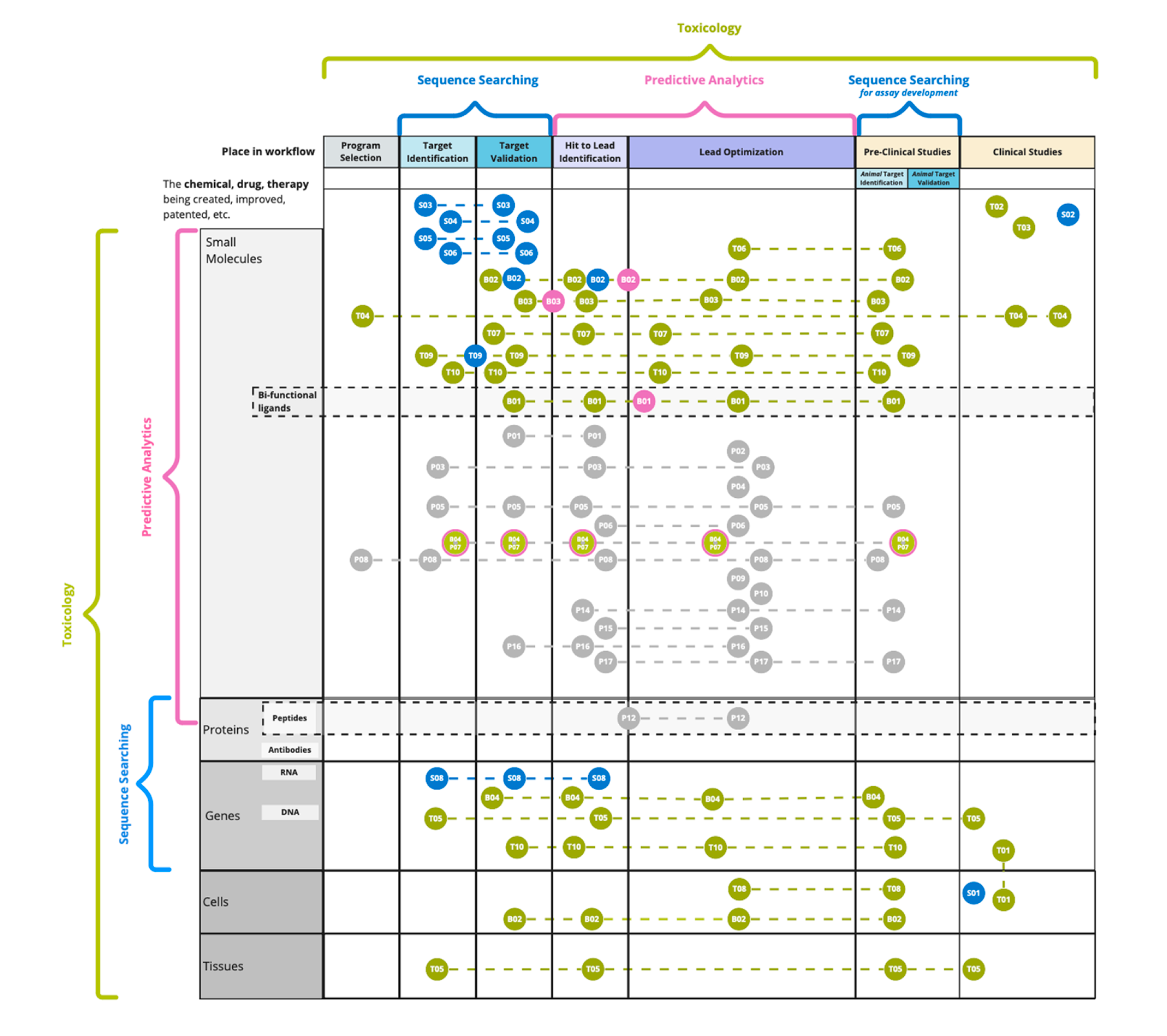
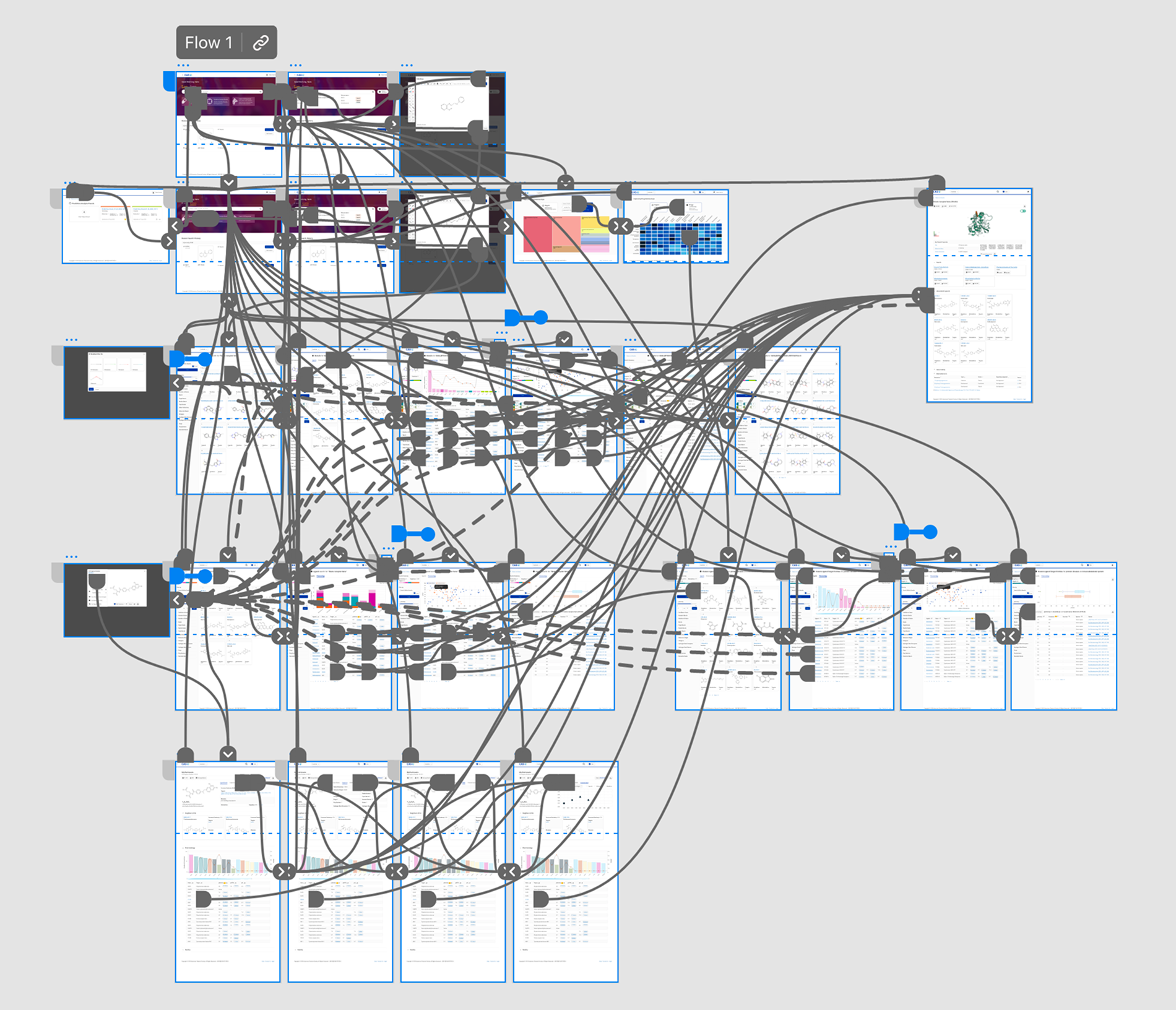
Initial prototype architecture and persona workflow map
Process & Development
I worked directly with the product manager to prioritize epics of work which would create the core information architecture as defined and validated by user research. In total, 215 epics were created for the commercial launch. This level of planning provided visibility and guidance for engineering efforts and sizing of work.
Working closely with the product manager, I created high-fidelity mockups and production-ready specifications in Figma, coinciding with our team's transition from Adobe XD. I actively developed a product-specific design library and components to expedite specification creation. Assets were delivered using Dev Mode in Figma, which the engineering teams were delighted to learn.
Transitioning to Figma enabled more spontaneous transparency with product and engineering teams. I closely collaborated with front-end engineers to ensure tighter designs and experience workflows, meticulously documented in JIRA. Before each new build was pushed to the beta program, I partnered with QA to ensure designs were implemented to specification.
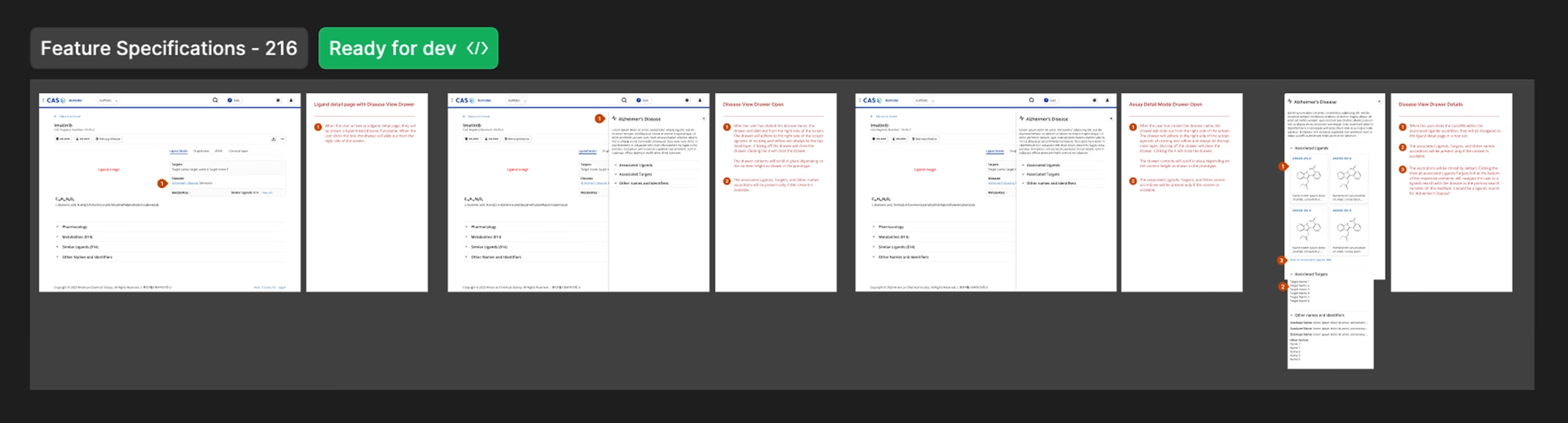
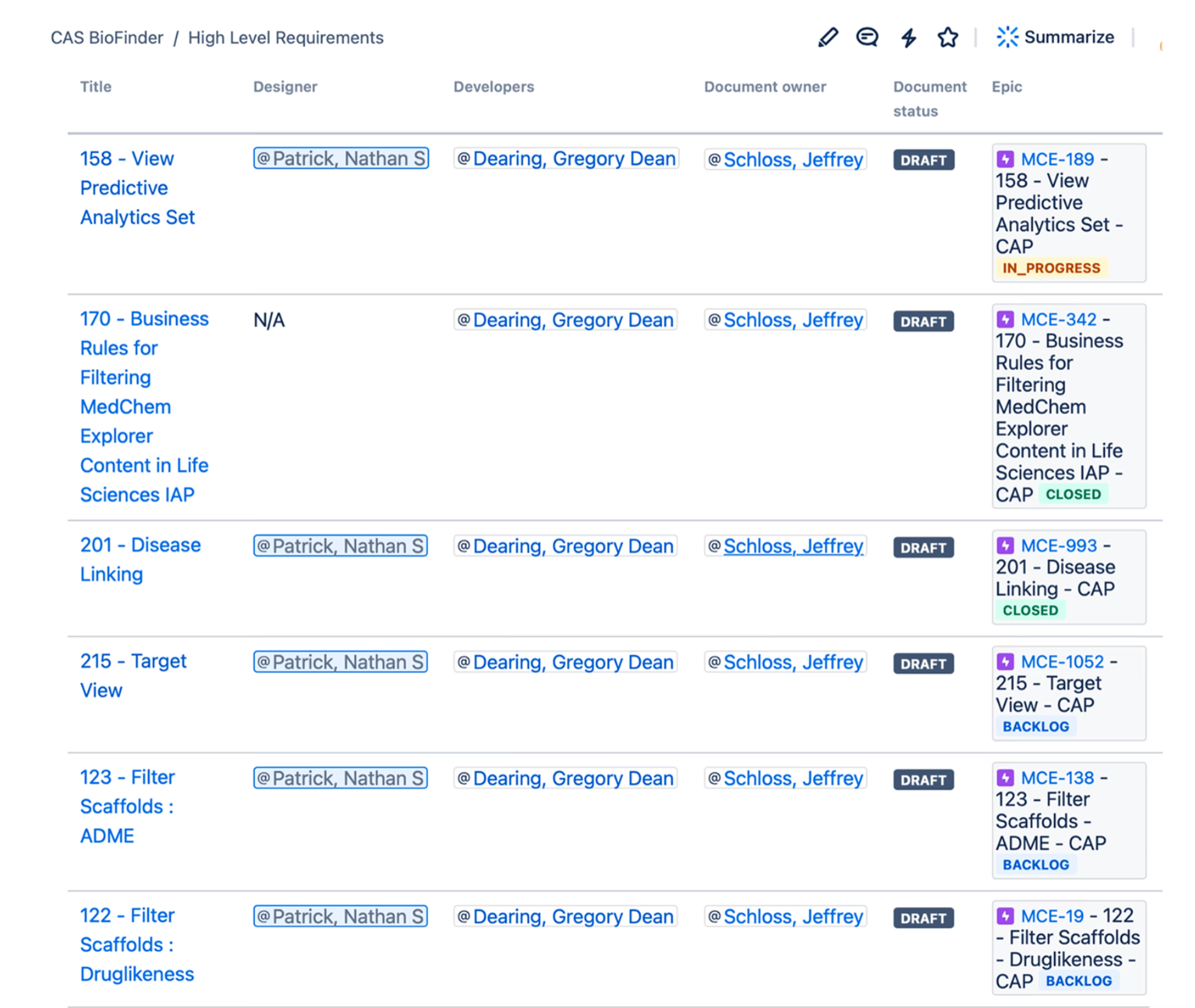
Figma production specs and JIRA sprint tracking for the 215-epic build
Commercial Launch & Feedback
After 11 months of development, the application launched commercially in May 2024. Throughout launch, multiple sessions were conducted soliciting feedback to discover additional desired functionality based on beta usage of the MVP.
We discovered that 72.6% of users preferred searching by drawn or known structures rather than text-based queries (27.4%). Of existing and potential customers surveyed, 82% said this solution was highly desirable and were excited to purchase at release.
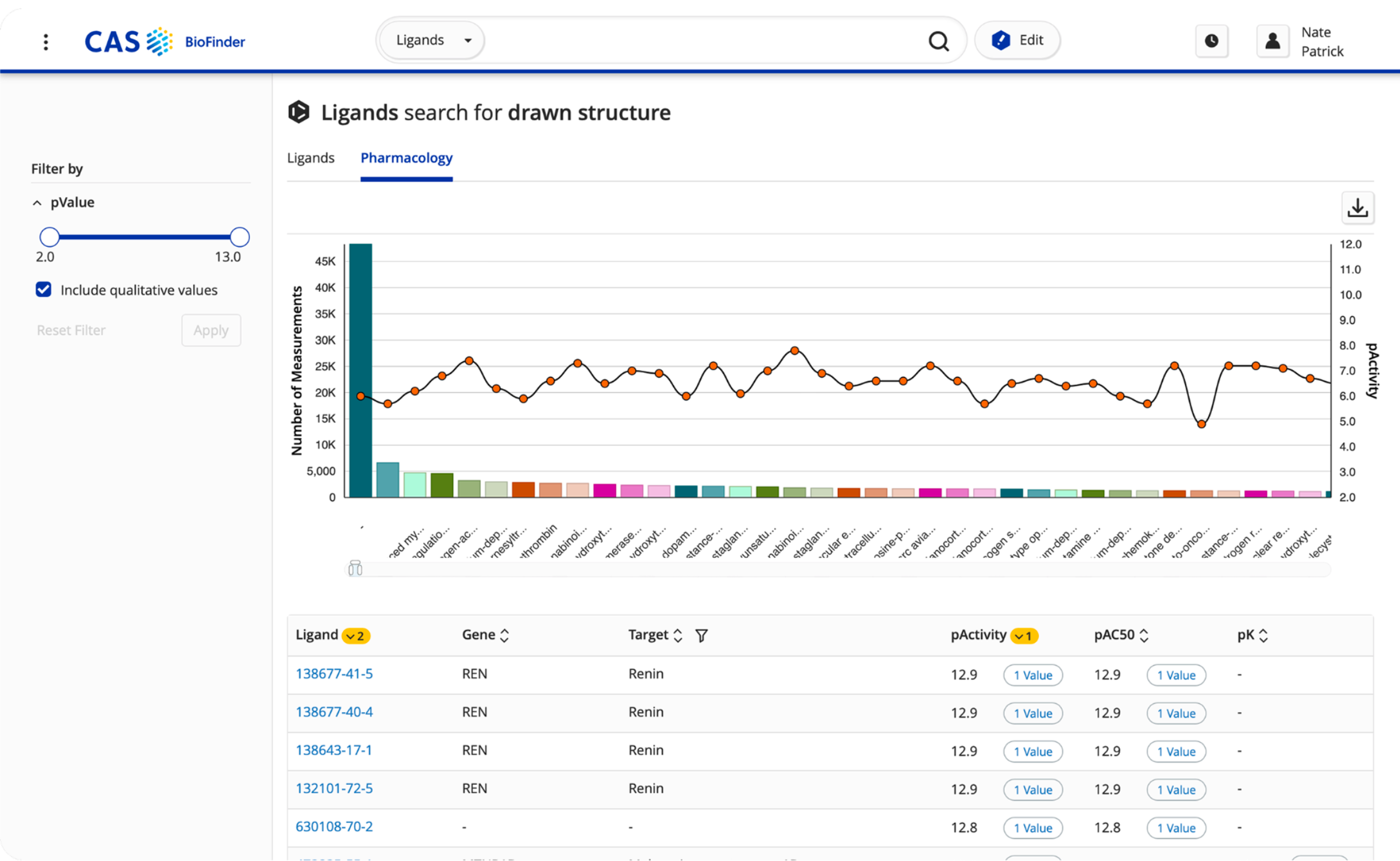
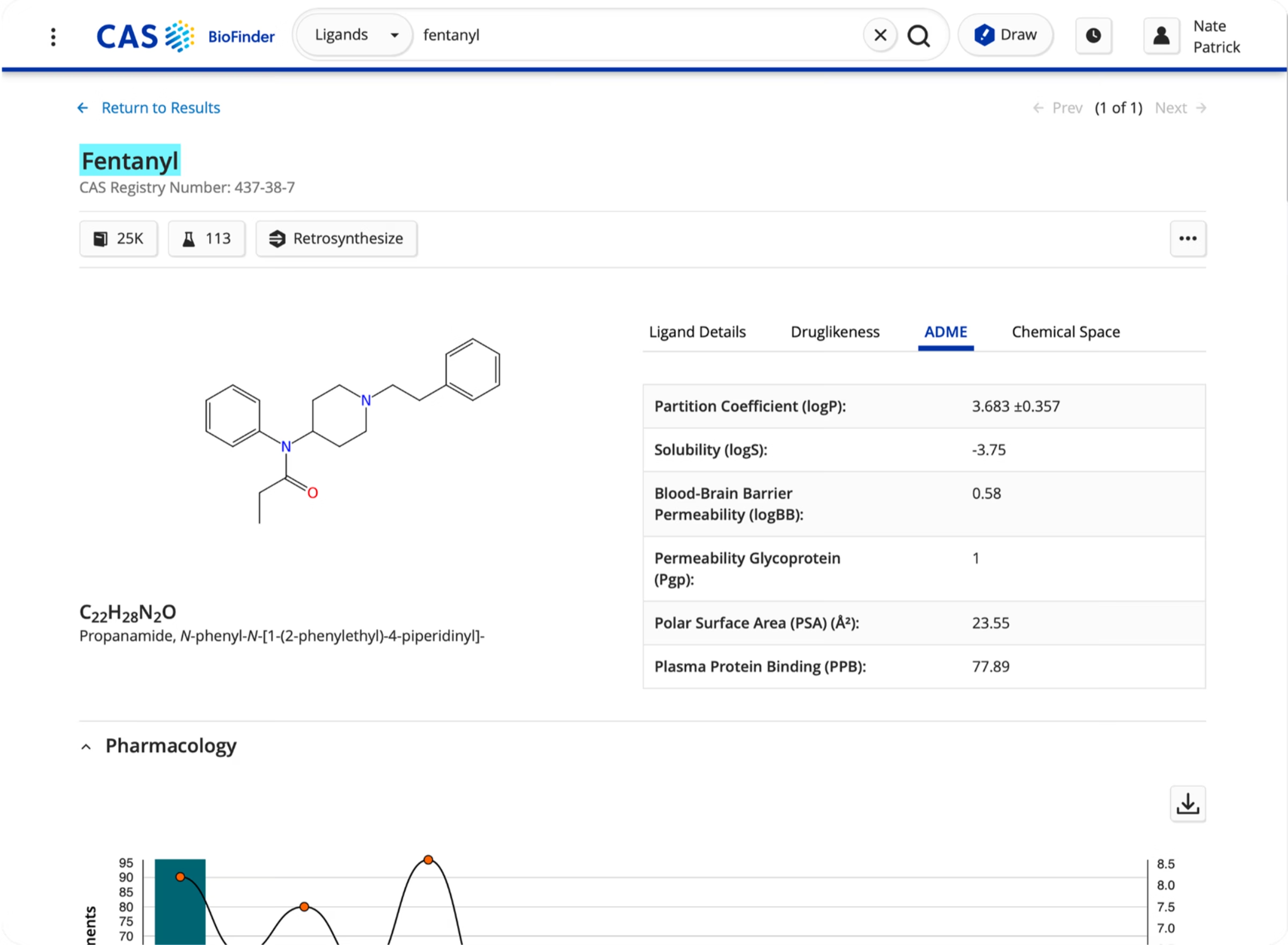
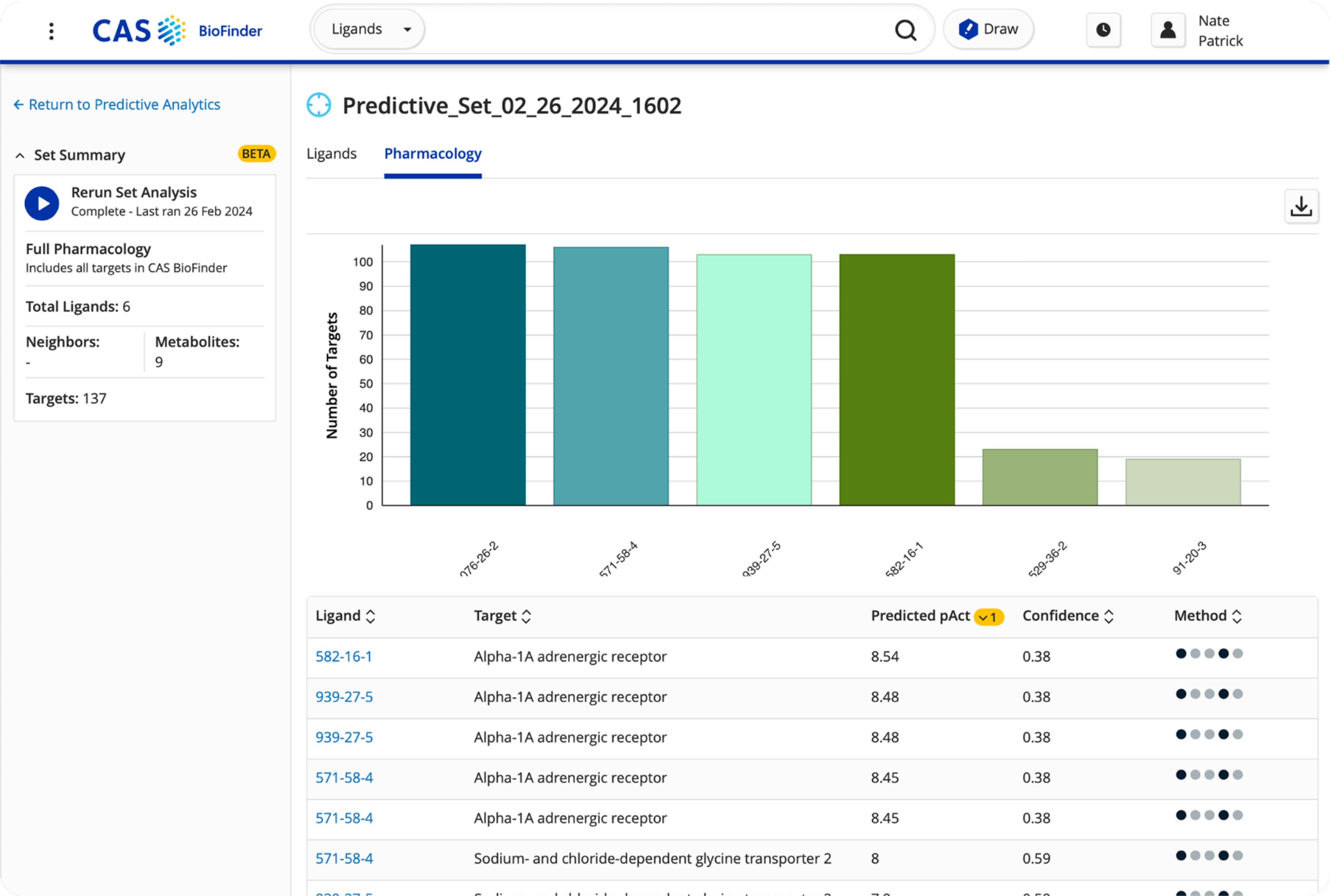
Alpha release screens: ligand results, drug detail, and predictive analytics
"BioFinder is a very unique, interesting product which associates proteins and structures with assay data. There are some other databases out there but I think this one is much more user friendly to chemists."
Biochemist, Research Participant"It's a really nice tool. It can summarize your literature search. So if you're working on a new project and you really want to get a lot of information in a short period of time, you can get an insight into the ligand or the specific target."
Medicinal Chemist, Research ParticipantLearning & Adjustments
After launch, we monitored usage daily and kept close tabs on sales motions. While feedback was positive, I began crafting second-version drafts to adjust the UX to be more aligned with what medicinal chemists and biochemists would expect, with greater integration of protein and disease detail pages.
Production adoption was initially slow, as CAS's primary sales mechanism targeted chemists. Leadership determined that an open trial period would drive growth, leveraging existing customers as advocates to their biological peers and encouraging them to try BioFinder in their daily research.
It was during this period that the UX team vetted Appcues, an in-product messaging and onboarding tool, to create first-time onboarding flows and explain new features. Monitoring user activity and listening to feedback in research sessions I moderated, I compiled a list of features and enhancements to feed the roadmap and satisfy a third user persona: the biologist.
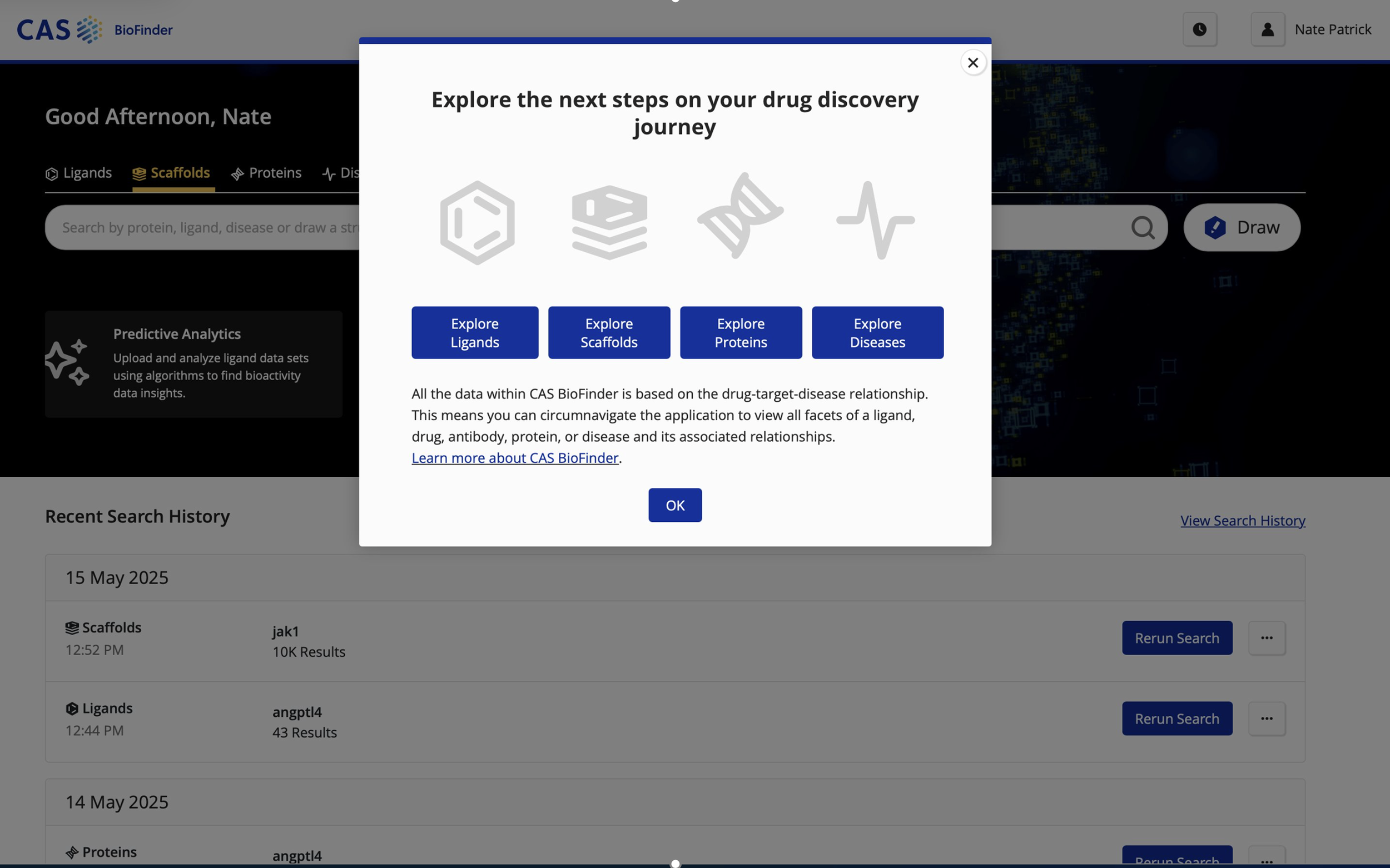
First-time onboarding flow designed in Appcues, guiding users through BioFinder's core search types
Refining & Releasing
The first release of BioFinder was intended to hook familiar customers in the pharmaceutical chemistry space. The second major release added:
- Two additional search types, proteins and diseases, tying all search types together to allow users to navigate the application from anywhere in their workflow.
- An activity analysis heat map allowing medicinal chemists to compare binding affinity of ligands against a target of interest.
- A revamped ligand and drug detail page for expanded content types.
- Refined predictive analytics to expand modeling capabilities, showing chemical structures next to protein and gene data for enhanced visualization.
- Revamped sequence search capabilities for biologist personas to search proteins by sequence algorithms, linking directly to protein and gene detail pages.
- Drug Intelligence to summarize FDA drug authorizations, dosages, and dates of approval.
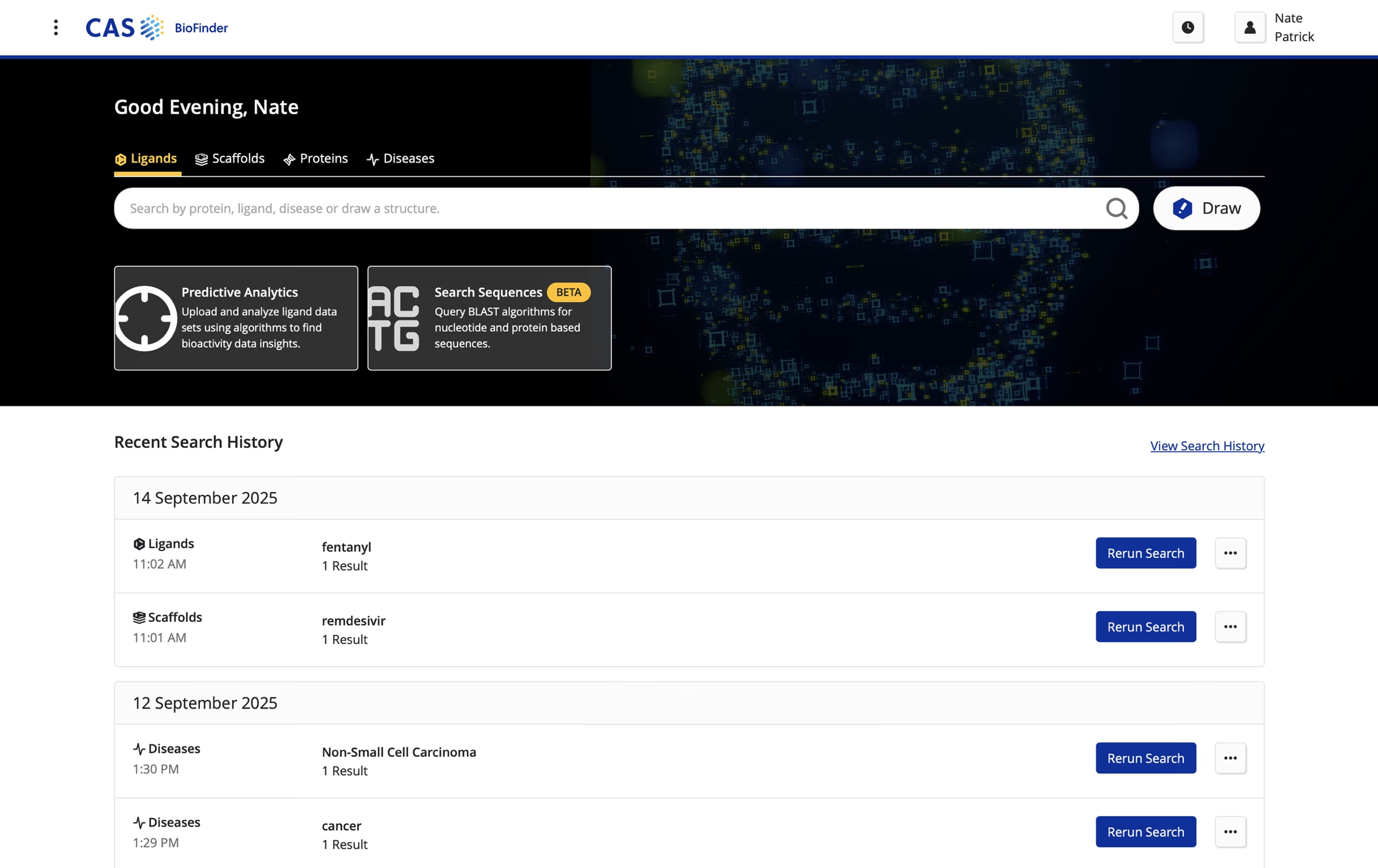
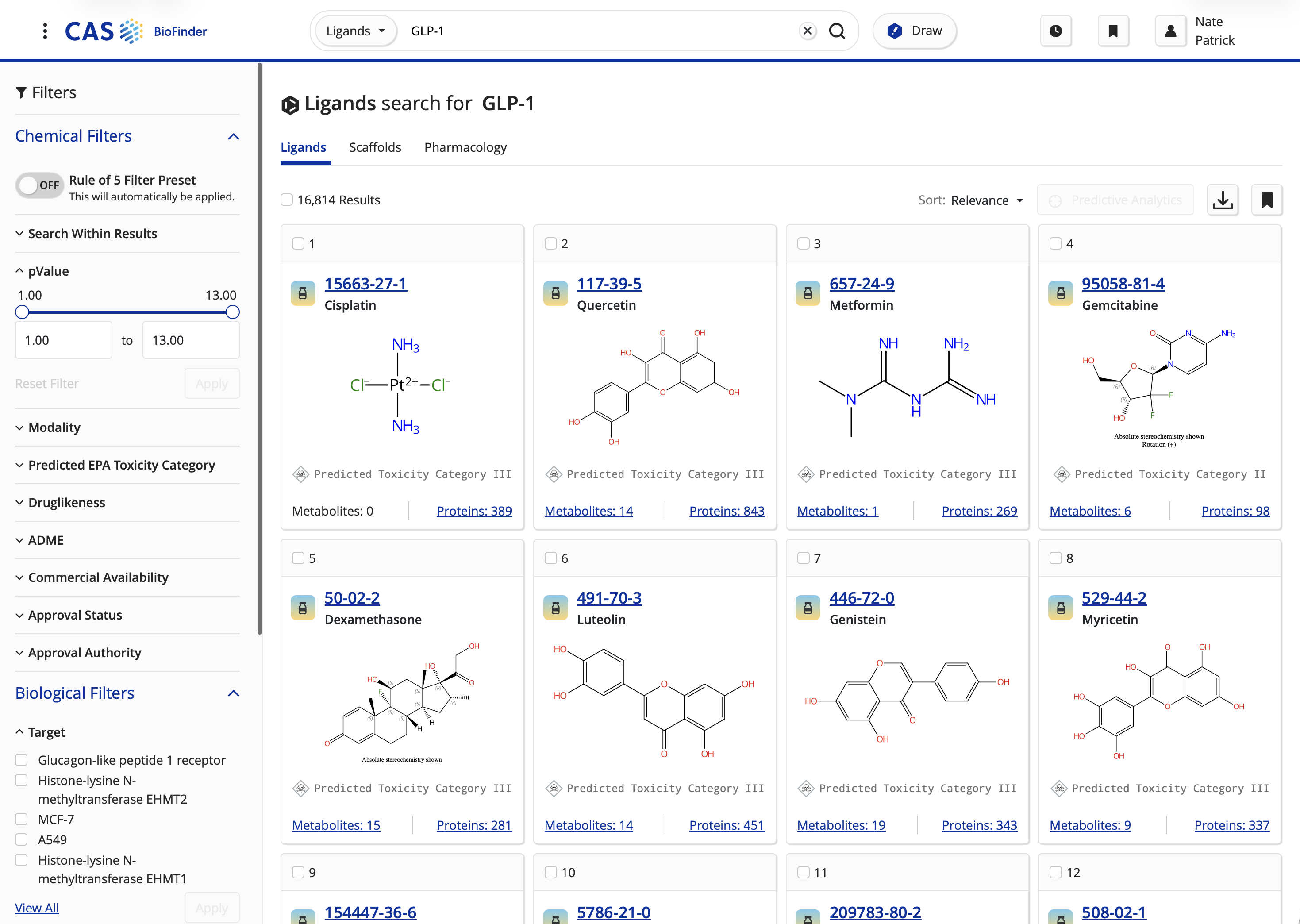
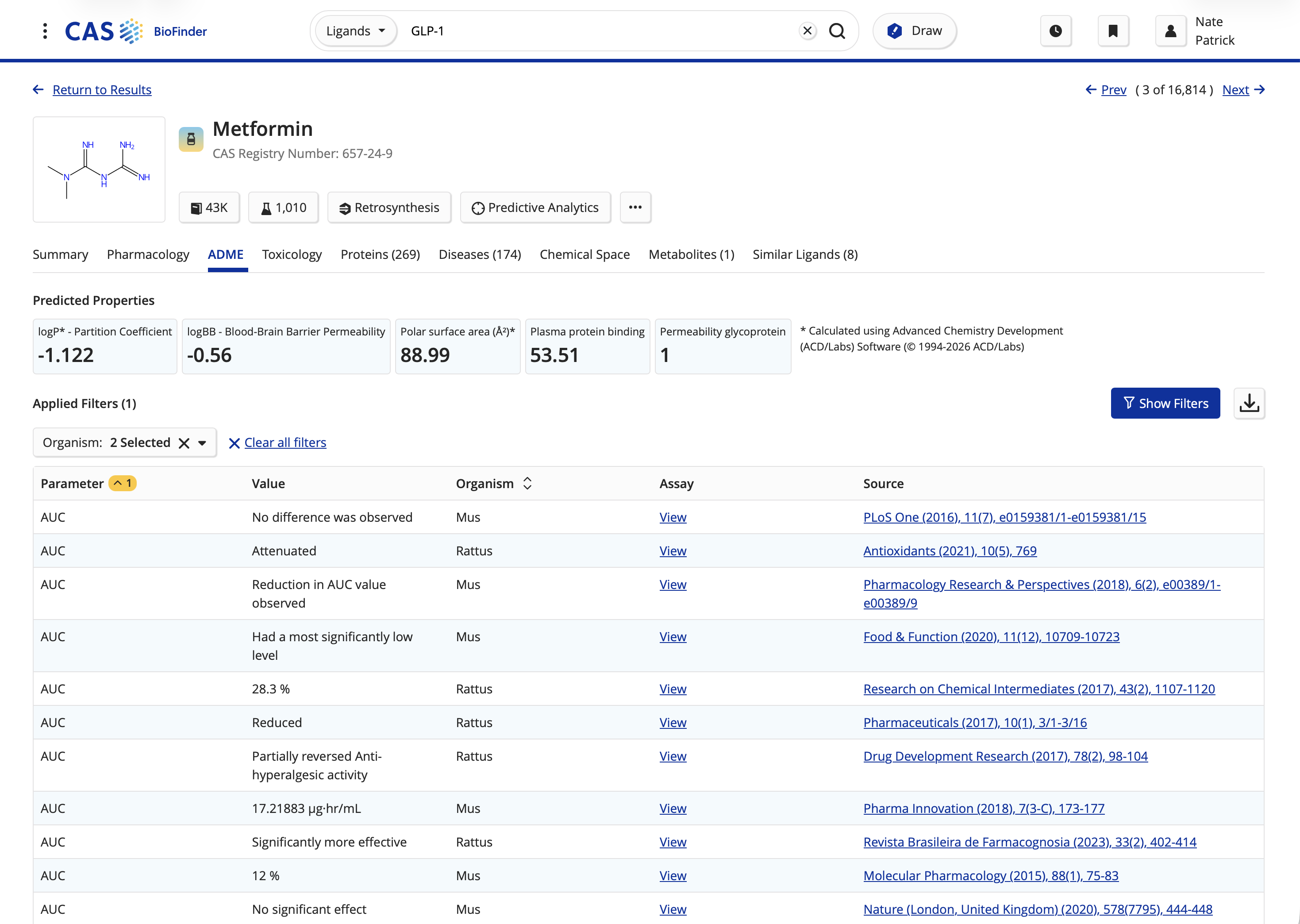
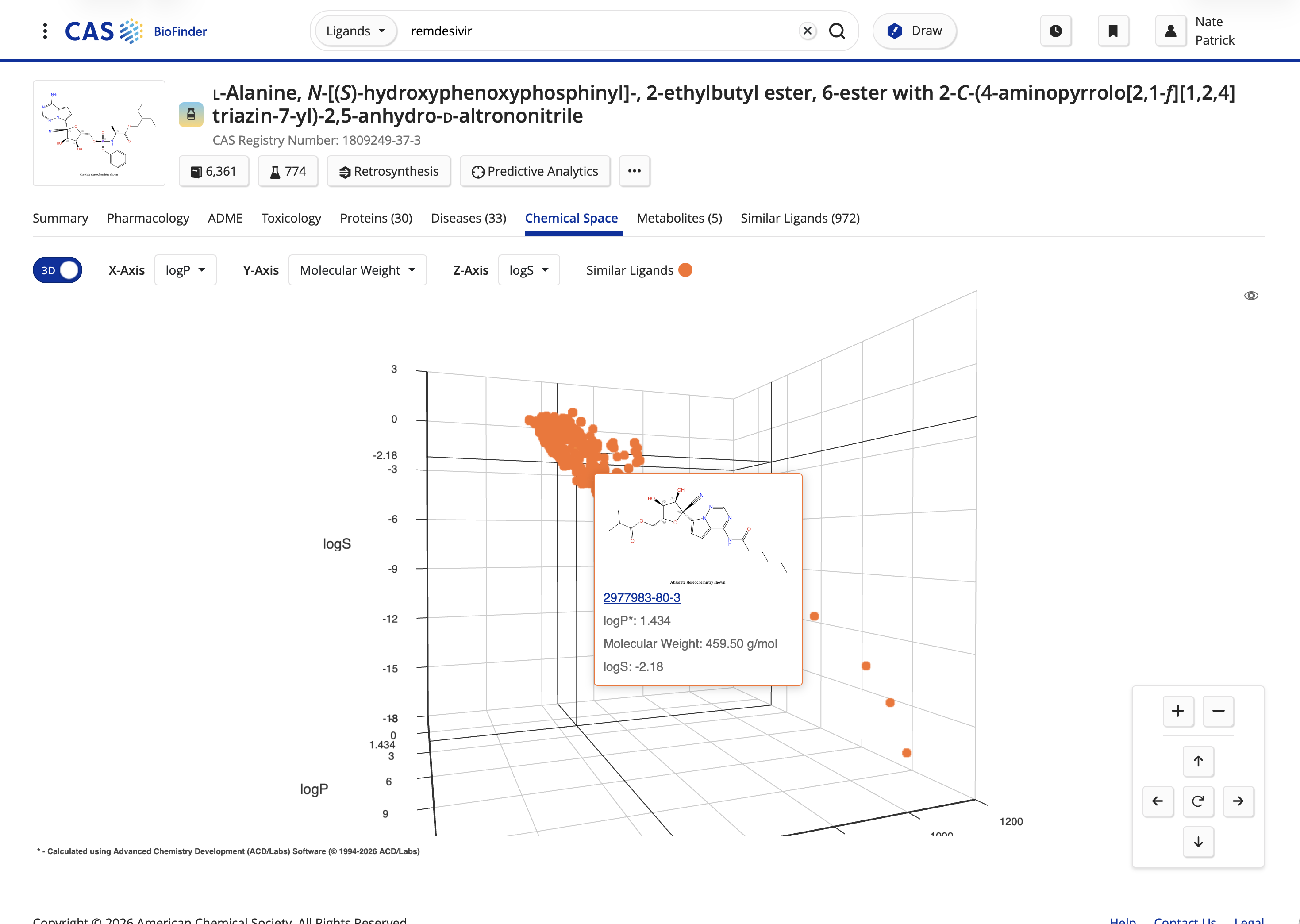
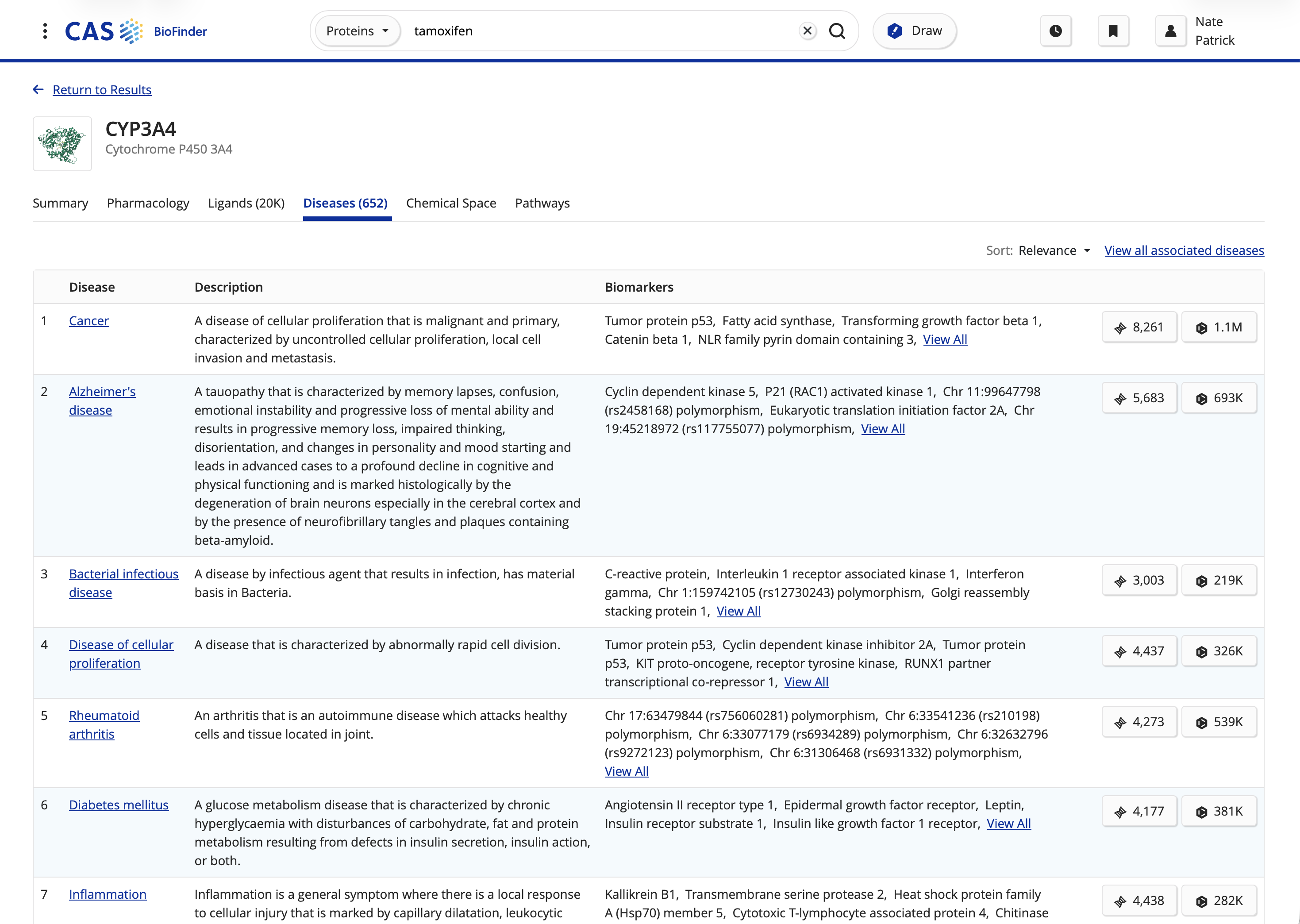
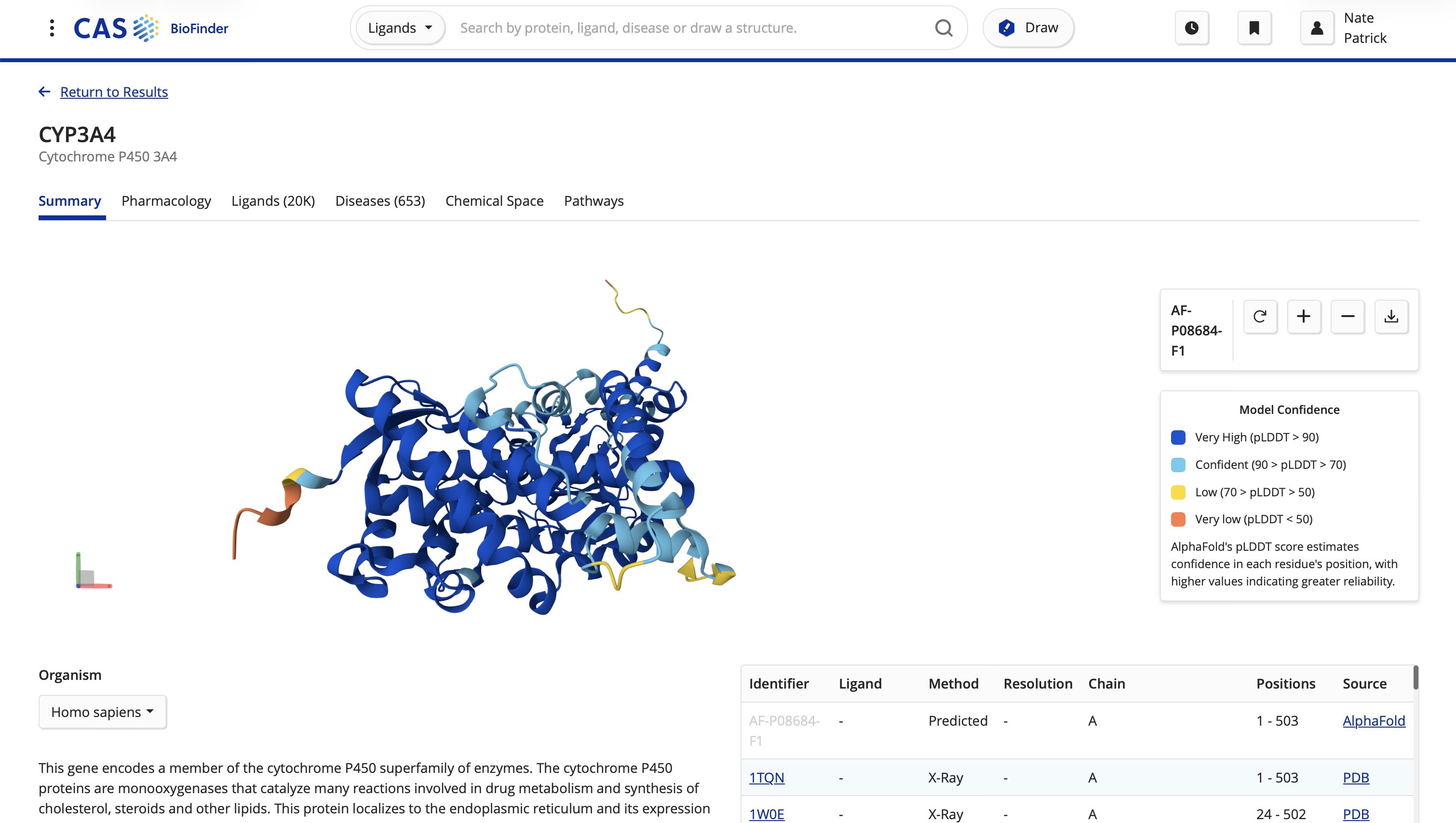
CAS BioFinder v2: homepage, ligand results, ADME, chemspace, disease ontology, and proteins
Version 2 Statistics
Over the summer of 2025, sales effectively closed 12 major deals, including two academic consortia, opening use cases for university research. The result was $3.67M in additional revenue across 14 countries.
3,155
Active users, +577% since launch
3,250
Onboarding flows shown, +429% since v2 release
82%
Time-to-task completion for target personas
$3.67M
Additional revenue in FY2025, across 14 countries
Data as of December 2025
Agentic Pivot
By late 2025, general-purpose AI assistants were getting real traction, and scientists were asking the obvious question: can these tools help me do my actual work? The opportunity, and the risk of doing nothing, were equally clear. If CAS didn't ship a science-smart agentic experience tied to its curated data, someone else would ship a worse one, and scientists would settle.
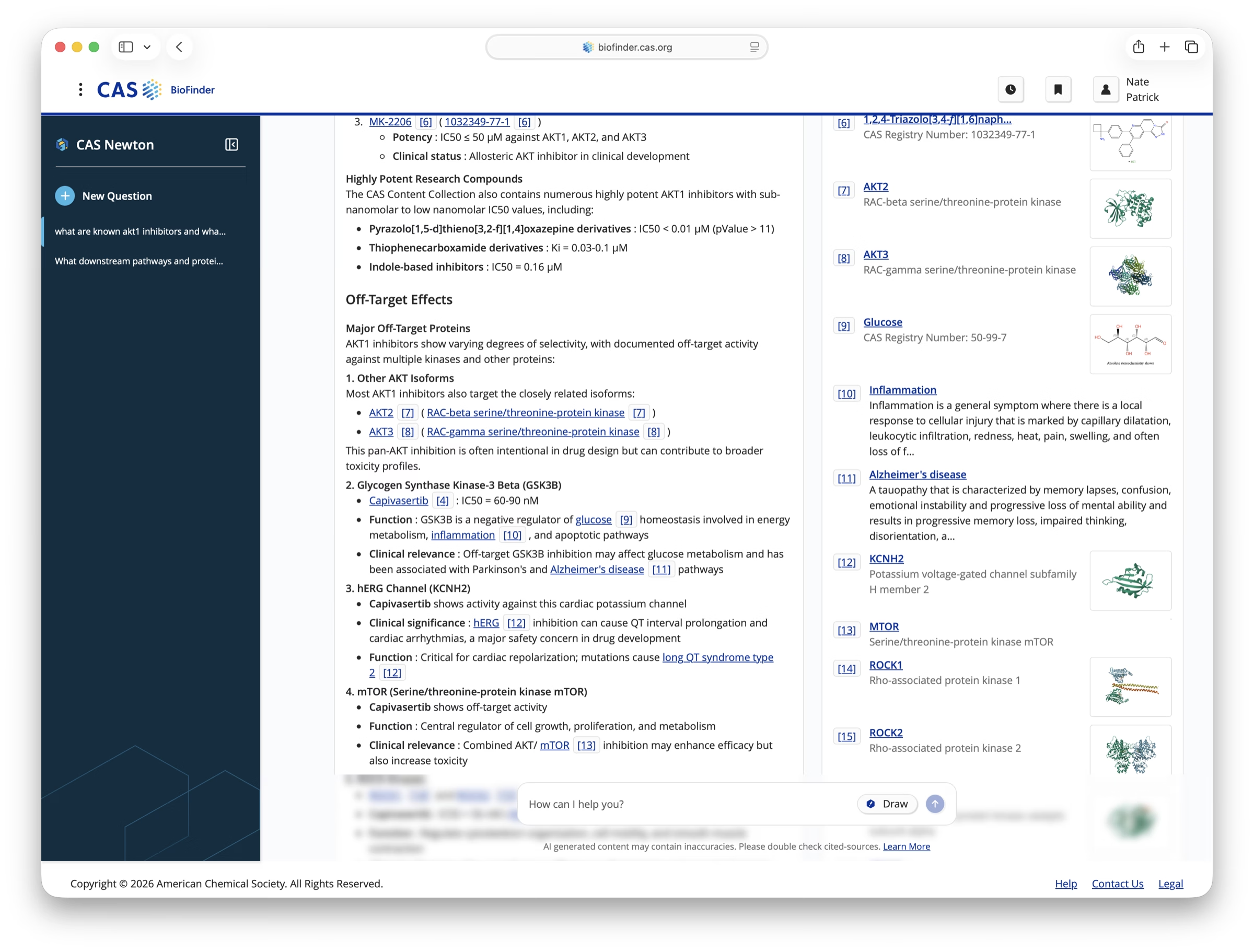
I pitched CAS Newton as the portfolio's agentic strategy: an AI experience purpose-built for scientific discovery, designed by scientists, grounded in the CAS Content Collection, and engineered to respect the privacy that our customers' competitive edge depends on.
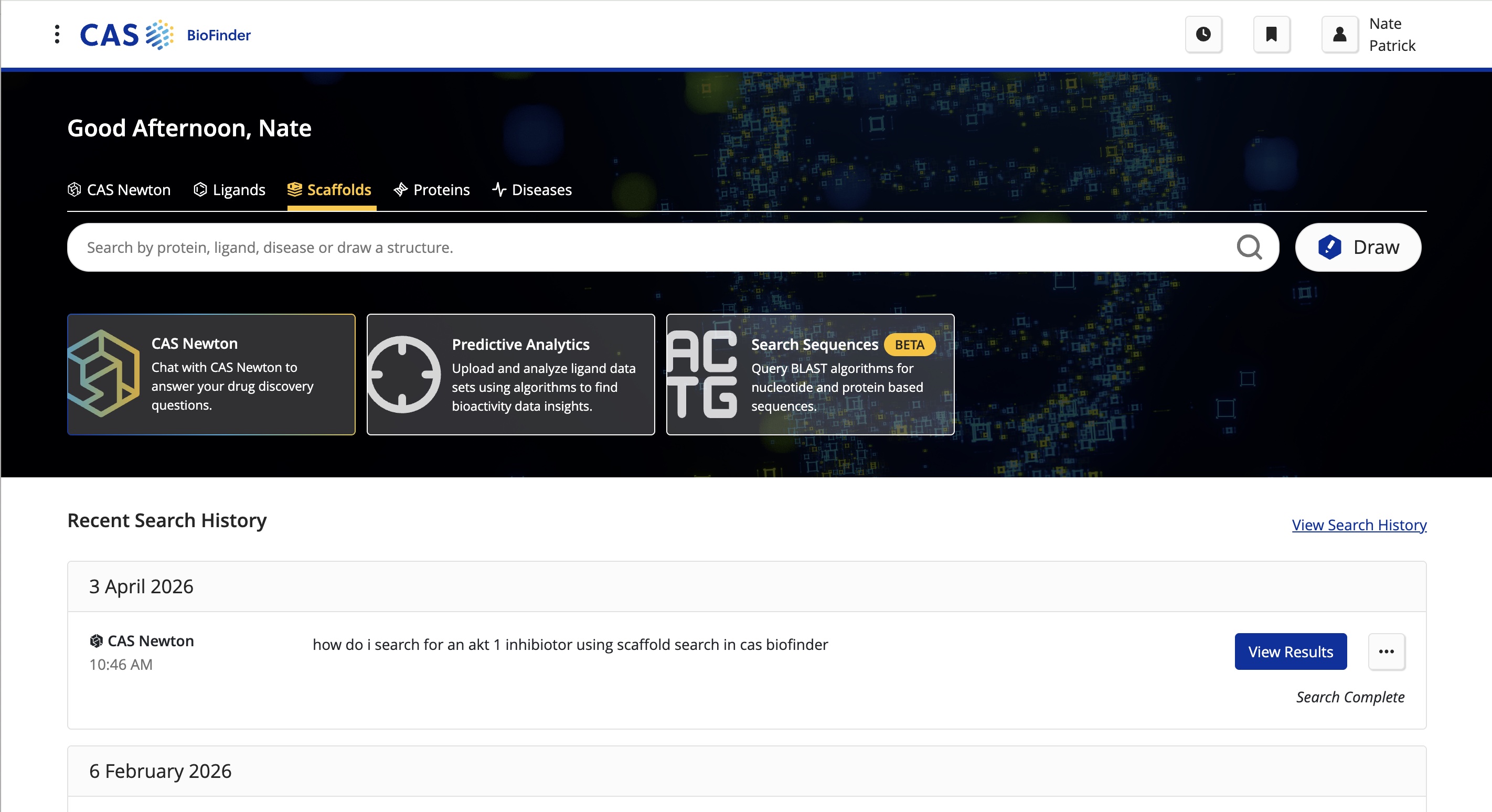
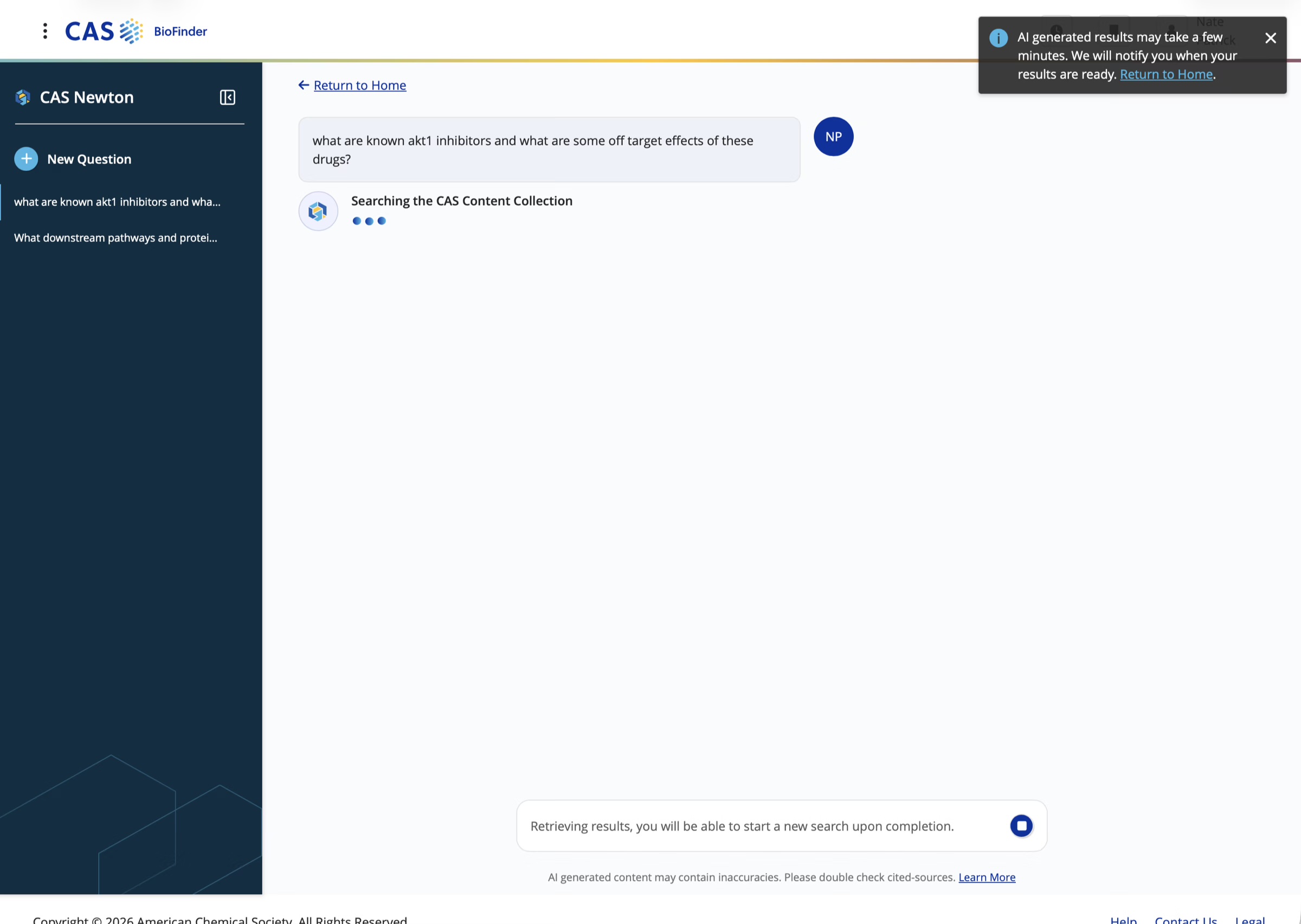
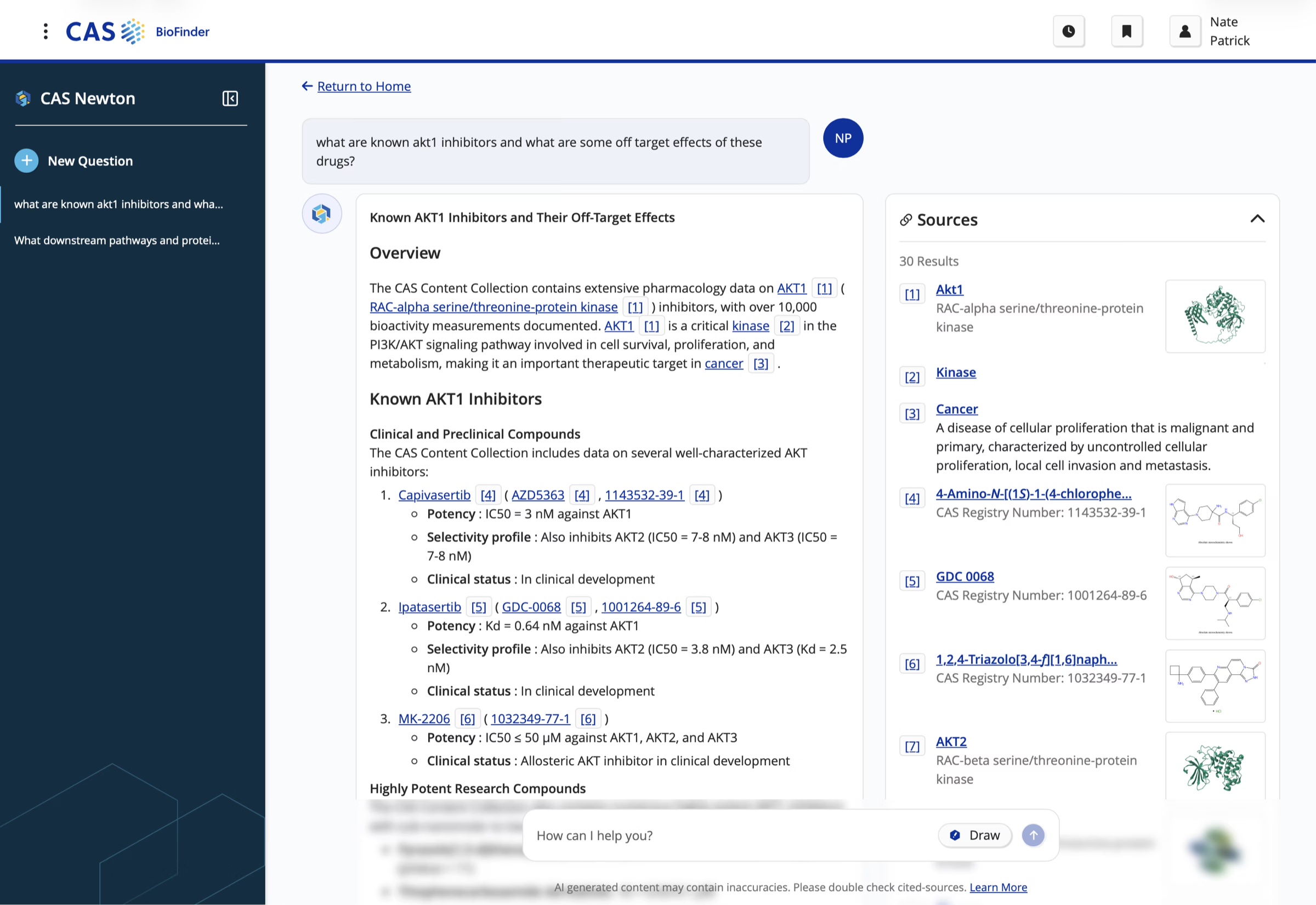
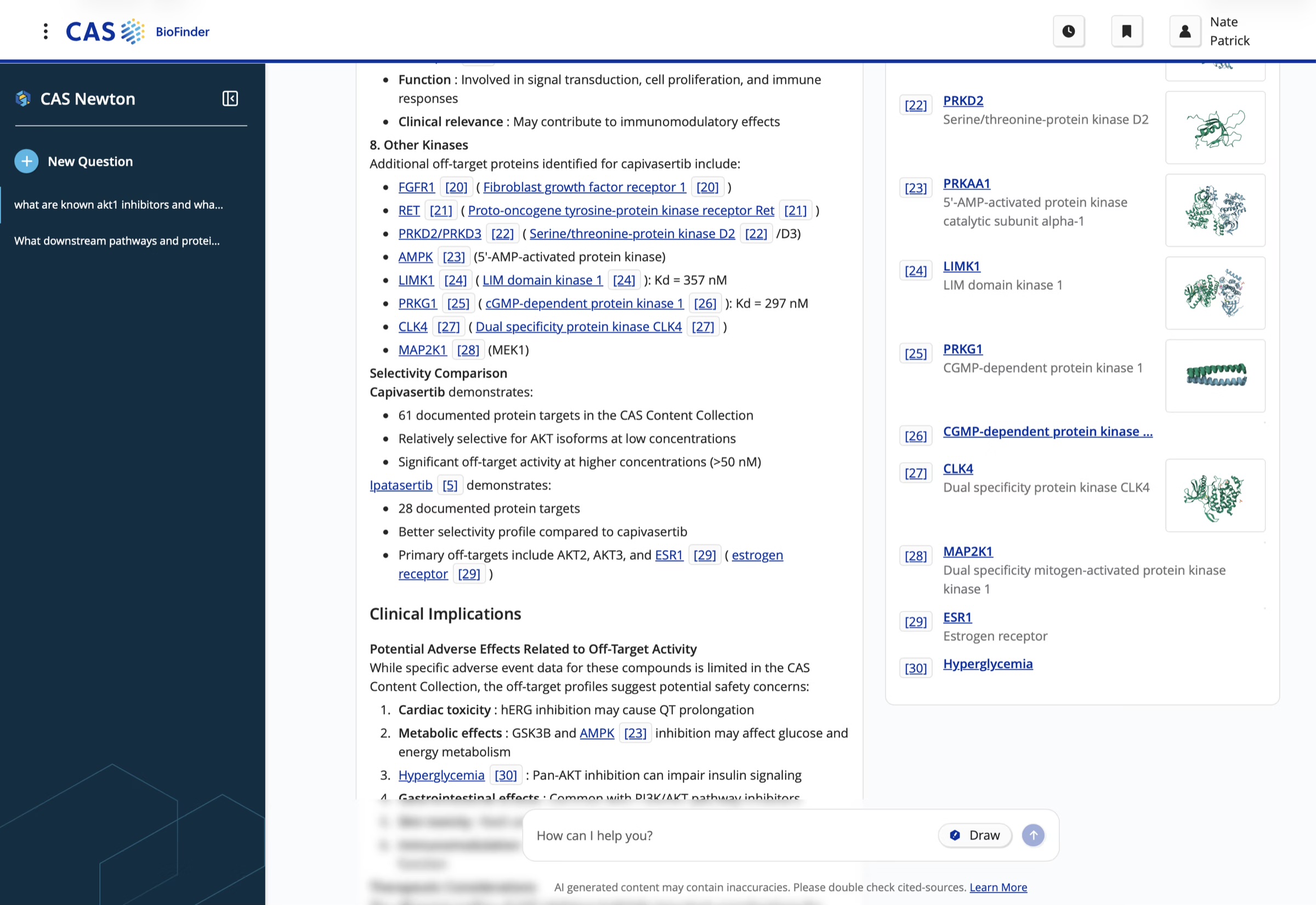
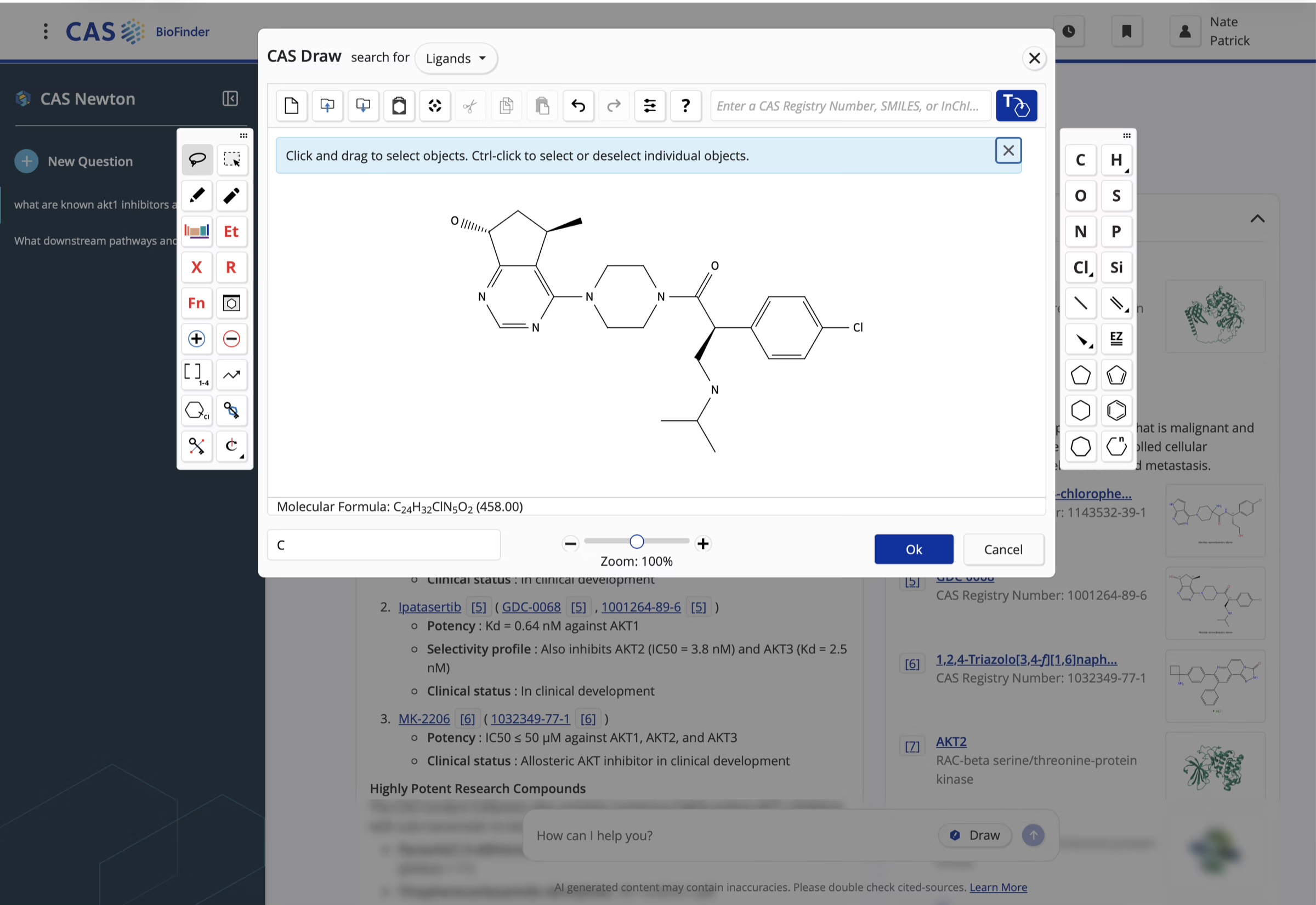
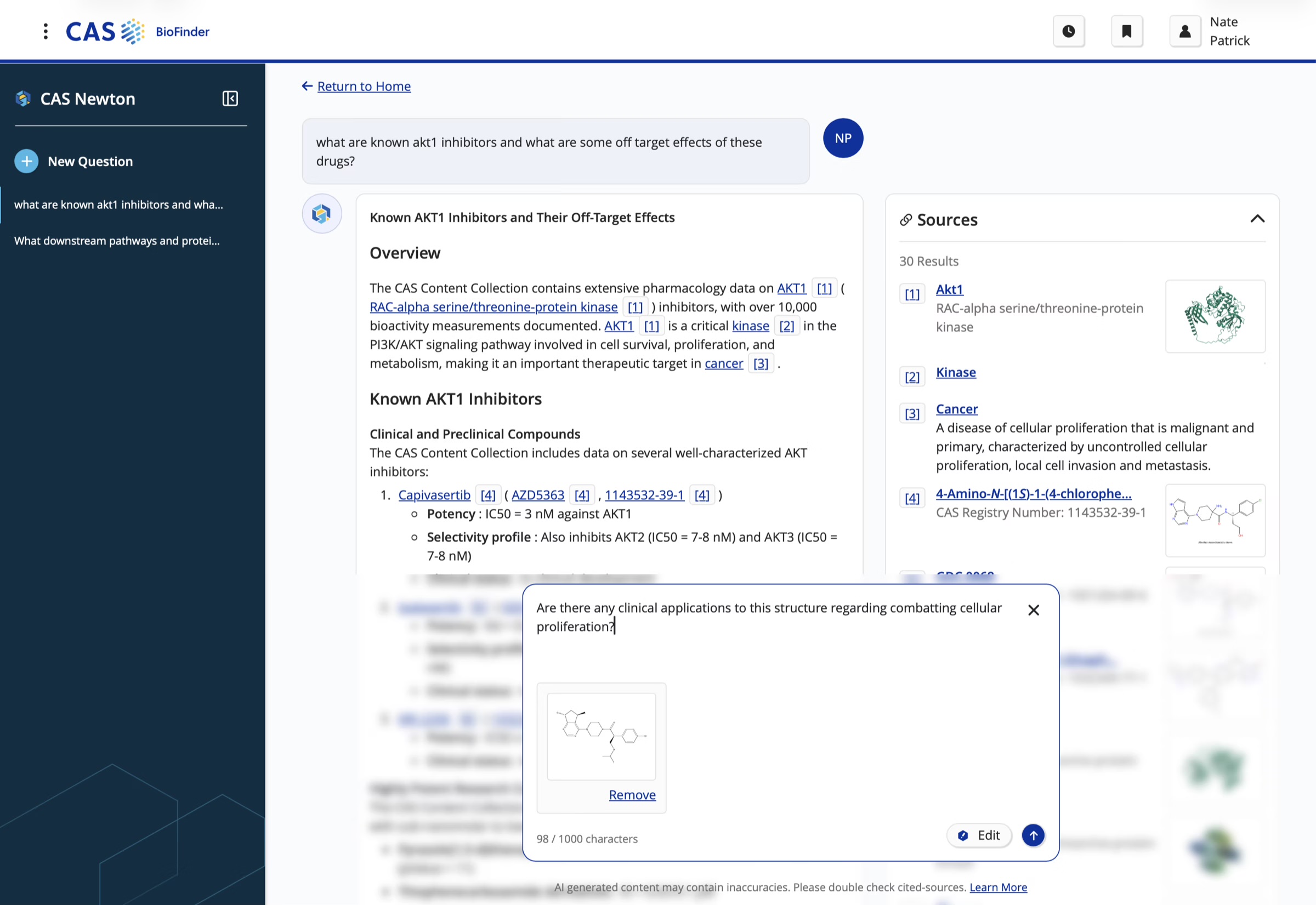
CAS Newton: an agentic research experience purpose-built for scientific discovery
Defining the Product
Search Summarization
Reference searches in CAS SciFinder routinely return hundreds of dense results. Newton's summarization layer distills the dominant themes and consensus findings so a researcher can read the landscape in a minute instead of an afternoon, with citations to every record used.
Agentic Search
A conversational layer that handles multistep research: widening the query, narrowing through precise filters, pulling evidence from the collection, and recommending what to look at next. Scientists ask the kind of messy, human question they'd normally take to a senior colleague, and Newton runs the sequence of searches needed to return a directional answer anchored in the literature.
Conversational Chat
Natural-language exploration of the CAS Content Collection, iteratively refined across turns, with every response traceable to its source record.
Process & Oversight
The product concept was designed by a direct report on my team, with close guidance from me on design best practices, accessibility, interaction patterns, and the quality bar set by the broader CAS portfolio. My role was to set the strategic direction, champion the work across executive and engineering leadership, protect the four-month timeline, and ensure the experience held together across CAS SciFinder and CAS BioFinder rather than fragmenting into two dialects of the same tool.
The compressed timeline forced ruthless prioritization. We shipped what would prove the product thesis within four months from start to commercial launch.
Commercial Launch
Summarization shipped to all CAS BioFinder and CAS SciFinder users at commercial release, making science-aware summaries a default part of reference search rather than a gated feature. Agentic search entered a limited release for a targeted cohort of CAS SciFinder and CAS BioFinder customers, giving us dense feedback loops with real research workflows before expanding access.
~730
Daily active users
74%
Thumbs-up rate on results
~41s
Response time for complex queries
20%
Queries in non-English languages
Statistics as of April 2026 for CAS Newton usage in CAS BioFinder